
Author: Alisa Parkhomenko, 4th-year International Relations student at Kuban State University, participant in CIIC projects.
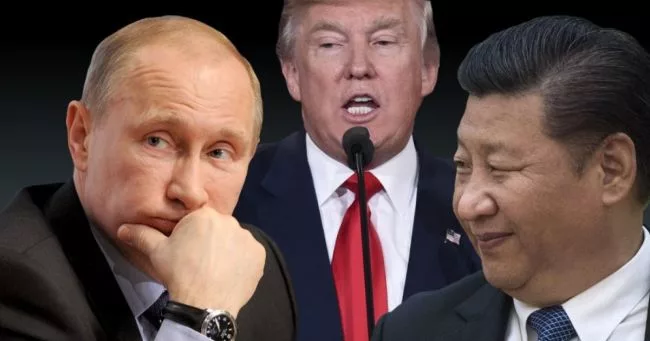
In May 2026, China demonstrated a sophisticated approach to great‑power diplomacy by hosting US President Donald Trump and Russian President Vladimir Putin in quick succession. These visits offered a vivid illustration of Beijing’s capacity to navigate complex, competing relationships at the heart of an evolving multipolar world. While Trump’s visit generated mostly symbolic outcomes and business‑oriented overtures, Putin’s trip resulted in a substantial package of agreements and a clearly articulated shared political vision. Together, the two engagements underscore a pivotal shift: China is no longer merely a rising power but a central hub where diverse global interests intersect, collide, and are negotiated.
What makes this moment especially telling is the context. Global supply chains are still reeling from tech decoupling and energy disruptions[1]. The Middle East remains volatile, with shipping lanes in the Strait of Hormuz a constant flashpoint[2]. Meanwhile, regional blocs from the EU to ASEAN are scrambling to preserve strategic autonomy while staying economically connected to Asia[3]. Against this backdrop, the fact that two leaders from opposing ends of the geopolitical spectrum landed in Beijing within days of each other signals a simple truth: whatever your policy goals, you can’t ignore China. The theoretical debates about multipolarity often get bogged down in labels like “neorealism” or “constructivism,” but the May 2026 visits cut through the jargon. They illustrate a practical reality: the world order is no longer shaped by a single dominant power, and China has become one of the key hubs where influence gets exercised through a mix of material strength and norm‑setting[4]. Beijing’s leverage comes from its economic weight, its infrastructure networks, and its willingness to offer alternatives to Western‑led institutions. The visits simply made that leverage visible.
Trump’s 14–15 May trip was the first by a US president to China in nine years. The optics were carefully staged: formal talks in the Great Hall of the People, followed by a private conversation in the Zhongnanhai garden(a setting reserved for sensitive, off‑the‑record discussions). The US delegation included not only diplomats but also high‑profile business figures like Elon Musk, underscoring Washington’s attempt to tie political dialogue to concrete investment opportunities.
Yet the substance fell short. While Trump touted “fantastic trade agreements,” both Chinese officials and independent observers described the outcomes as modest. The main agenda items centered on stabilizing shipping in the Strait of Hormuz and the situation around Iran—issues where cooperation is in both countries’ interest, even amid broader rivalry. On the thornier topics:Taiwan, semiconductor controls, and technology competition. Analysts at Reuters[5] and the Financial Times[6] framed the visit as largely symbolic: a way to keep communication channels open without resolving core disagreements.
By contrast, Putin’s 19–20 May visit was all about deepening coordination. It marked his 25th trip to China, and the protocol reflected a relationship built on mutual strategic interests. Tiananmen Square was decorated for the Russian leader’s arrival, and a traditional tea ceremony underscored the level of trust Beijing was willing to display publicly. Unlike Trump’s delegation, which leaned heavily on business representation, Putin’s team focused on intergovernmental and sectoral agreements.
The results were tangible. Over 40 intergovernmental, interdepartmental, and corporate deals were signed, covering energy, transport, and cross‑border payments. Key outcomes included extending the visa‑free regime for Russians until the end of 2027, building a second track on the Zabaikalsk–Manzhouli railway to boost freight capacity, and advancing major energy projects like Power of Siberia‑2, Tianwan NPP, and Xudapu NPP. Beyond economics, the two leaders issued a joint statement outlining four principles for a multipolar world: rejecting a hierarchy of nations, upholding the indivisibility of security, prioritizing international law over narrow bloc interests, and opposing unilateral dominance in global affairs. These principles amount to a political blueprint that directly challenges the logic of exclusive Western‑led alliances[7]. In recent months, this pattern of high‑level engagement with Beijing has extended beyond Washington and Moscow. Visits by German Chancellor, French President, and the head of the EU to China highlighted the broad strategic interest European capitals hold in maintaining direct dialogue with Beijing. For the EU, these contacts reflect an effort to balance economic interdependence with the pursuit of greater strategic autonomy. While Brussels seeks to reduce over‑reliance in critical sectors such as electric vehicles, batteries, and rare earths, it simultaneously aims to preserve channels for cooperation on climate action and digital governance. The successive European visits thus signal a pragmatic recognition: regardless of growing competition, China remains a pivotal actor whose cooperation is indispensable on several transnational policy fronts[8]. China’s ability to host such contrasting agendas in quick succession owes much to its network of multilateral and bilateral tools. The Belt and Road Initiative (BRI) remains a cornerstone of this strategy. As of 2024, the BRI includes commitments with more than 150 countries and over 30 international organizations, spanning infrastructure, energy, and digital connectivity. According to World Bank assessments, BRI‑related investments have supported transport corridors and industrial zones across Asia, Africa, and Latin America, though concerns about debt sustainability and environmental standards persist[9]. Independent reporting from Reuters[10] and the Associated Press[11] highlights both the growth of BRI projects and the ongoing scrutiny they face in recipient countries. Beijing also leverages institutions like the Asian Infrastructure Investment Bank (AIIB), which had over 100 members and more than $40 billion in approved projects by 2023, and forums such as BRICS and the Shanghai Cooperation Organisation (SCO) to build alternative platforms for economic and security cooperation[12]. These mechanisms don’t just finance roads and power plants-they help reshape the rules of engagement by promoting norms like non‑interference, consensus‑based decision‑making, and South‑South cooperation.
For policymakers, the May 2026 sequence presents a clear dilemma. The US must walk a tightrope between competing with China on technology and critical minerals while cooperating on shared risks like climate change, nuclear security, and maritime stability. Keeping communication channels open,even when outcomes are limited,is itself a form of risk management. For the EU, the challenge is reconciling economic interdependence with strategic autonomy. China remains a vital trading partner, yet Brussels is increasingly wary of over‑reliance in sectors like electric vehicles, batteries, and rare earths. The EU’s emerging approach blends targeted investment screening, diversified supply chains, and selective partnerships on climate and digital governance[8].
Regional actors face their own calculus. India, for example, navigates a delicate balance: engaging with China on multilateral platforms like BRICS while managing a tense border dispute and competing infrastructure visions. Southeast Asian nations similarly seek to benefit from Chinese investment while preserving autonomy and avoiding entanglement in great‑power rivalries. In this sense, the May visits weren’t just about US‑China and Russia‑China relations; they sent a signal to every middle power that aligning too closely with one bloc could mean losing access to another. Ultimately, the back‑to‑back visits crystallize a new reality. China’s strength lies not in replacing existing systems, but in offering parallel ones:alternative financing, different diplomatic norms, and competing economic models. That’s why leaders keep coming to Beijing: they’re not just negotiating deals, they’re testing how much space they can carve out for themselves in a world where influence is more distributed and options more varied. For practitioners, the takeaway is straightforward: any strategy toward Asia must account for China as a hub, not just as a competitor. Whether you’re designing trade policy, planning infrastructure investments, or shaping security doctrines, Beijing’s multipolar playbook is now a core variable in the equation.
References:
[1] UNCTAD. World Investment Report https://unctad.org/topic/investment/world-investment-report [2] IEA (International Energy Agency). Oil Market Report / Maritime Security Briefs https://www.iea.org/reports/oil-market-report-may-2026 [3] EU External Action Service (EEAS) / ASEAN Secretariat. https://asean.org/wp-content/uploads/2026/02/ASEAN-Connectivity-Strategic-Plan.pdf [4] Realist/constructivist approaches https://mwi.westpoint.edu/sticks-and-stones-realism-constructivism-rhetoric-and-great-power-competition/ [5] Reuters. Reports on Trump’s visit to China (May 2026) https://www.reuters.com/world/china/trump-returns-china-with-stability-stalemate-2026-05-16/ [6] Financial Times. Analytical articles https://www.ft.com/content/5d79f7a3-8b54-4c15-a3a4-40881147f66f [7] Joint statement by the leaders of China and Russia (May 2026) — www.kremlin.ru/supplement/6486 [8] European Commission. https://single-market-economy.ec.europa.eu/sectors/raw-materials/areas-specific-interest/critical-raw-materials/critical-raw-materials-act_en [9] World Bank. https://www.worldbank.org/en/programs/debt-toolkit/dsa [10] Reuters.
https://www.reuters.com/markets/china-spent-240-bln-bailing-out-belt-road-countries-study-2023-03-27/ [11] Associated Press. https://apnews.com/article/china-belt-road-initiative-a4b08290cf94e4f2dffe368a013c5129 [12] AIIB.
https://www.aiib.org/en/news-events/annual-report/2023/index.html